1 min read
Cambodia's Year-Round Start Dates: The Options Nobody Talks About
Program details and figures reflect our Cambodia program as of mid-2026 and can change. Confirm current intake dates and specifics with us before...

Current as of September 2026. Salary, tax, and intake figures for Cambodia change often. Confirm current numbers with our team before committing money or travel.
Every week, someone tells me why they can't do this. I don't have a degree. I'm past whatever age cutoff the brochure lists. I missed this year's one intake window by three weeks.
Most programs earn that hesitation honestly. They do have degree requirements. They do run one start date a year. They do cap out around 35.
Cambodia doesn't.
This is the CEP program built for the person who's already been told no somewhere else.
No bachelor's degree required. Ages 21 to 59, with applications past 40 reviewed individually instead of turned away on sight. Minor visible tattoos, disclosed and considered rather than automatically disqualifying. Where other programs hand you a list of reasons to say no, Cambodia opens with yes and works backward from there.
It also gives you more room to get there. Eight intake dates a year, more than any other country CEP places teachers in. Miss one and the next is usually four to eight weeks away, not twelve months.
The dates left in 2026 are October 26, November 30, and December 28, with 10 spots currently open in each of the last two. 2027 opens with January 25 and July 19, the two windows that line up with the start of the Cambodian school semester and tend to fill first.
If one date doesn't work, another one does. That's the whole point of building a program around eight intakes instead of one.
Teachers without a degree earn $800 to $1,500 a month. Degree holders earn $1,000 to $1,600. Rent in Phnom Penh, Siem Reap, or one of the smaller placement cities runs $300 to $400 a month, and day-to-day living costs land around $10 a day, tuk-tuk rides included.
Cambodia taxes the first $375 of monthly income at 0%, the next bracket at 5%, and the rest at 10%. After rent and taxes, teachers save $200 to $400 a month. Some add private tutoring on the side and do better than that.
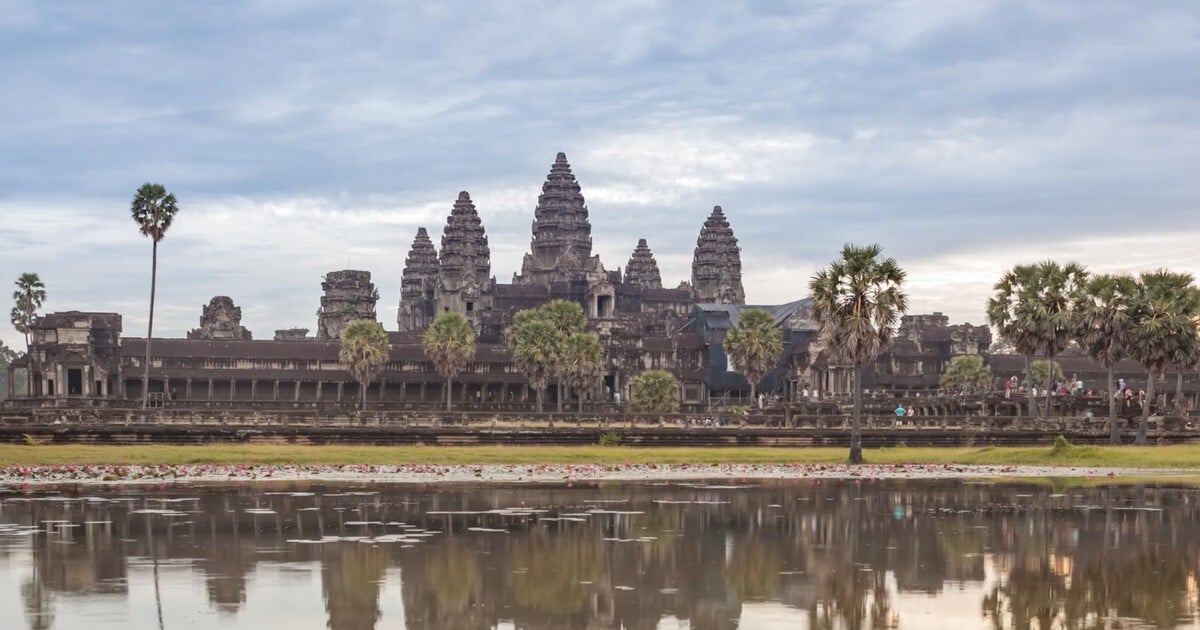
You can spend a Saturday at Angkor Wat and be back in your own bed by Sunday night. Phnom Penh, Siem Reap, and the smaller placement cities put Thailand, Vietnam, and Laos within a weekend's reach. Cambodia right now is a country rebuilding, not simply reopening, and teachers describe a population that's curious, warm, and hungry to learn English.
Cambodia also enforces strict drug laws and expects respect for the local government, the same way any country you'd choose to live and work in has its own rules worth knowing before you land.
Talk to us about teaching in Cambodia. We'll walk you through the next intake date that fits your timeline.
No. Cambodia is one of the only CEP programs that doesn't require a bachelor's degree. You do need an accredited TEFL, TESOL, or CELTA certificate of at least 120 hours. If you don't already have one, CEP's TEFL Plus course satisfies that requirement and is bundled into the program. You can try the first three modules free before committing to anything.
The standard range is 21 to 59. Applicants over 40 are reviewed individually rather than turned away automatically, which is wider than most of CEP's other country programs.
Eight. Cambodia runs more intake dates than any other country CEP places teachers in, roughly one every four to eight weeks. July and January line up with the start of the Cambodian school semester and tend to fill first.
Teachers without a degree earn $800 to $1,500 a month; degree holders earn $1,000 to $1,600. After rent and Cambodia's tiered tax brackets, most teachers save $200 to $400 a month. Confirm current figures with CEP before committing, since they change.
CEP also places teachers in Thailand, Japan, South Korea, Costa Rica, and Vietnam, each with its own degree, age, and intake requirements. Talk to us and we'll help you find the program that actually matches your situation.
The Cultural Exchange Project is a 501(c)(3) nonprofit that has placed native English speakers in paid teaching positions abroad for decades. Programs in Thailand, Japan, South Korea, Costa Rica, Cambodia, Spain, and Vietnam.
Randy LeGrant, CEP's Executive Director, writes these blog posts. If you like his writing, he also writes The Crossing — a weekly letter drawn from fifty years of watching people change their lives and their location. One story, one step, one question. Three minutes, every Friday. Subscribe free here.
1 min read
Program details and figures reflect our Cambodia program as of mid-2026 and can change. Confirm current intake dates and specifics with us before...
1 min read
Conversation Corps-Egypt is here. Magnificent monuments are everywhere. The pointed perfection of the Pyramids of Abu Sir, soaring minarets of...
1 min read
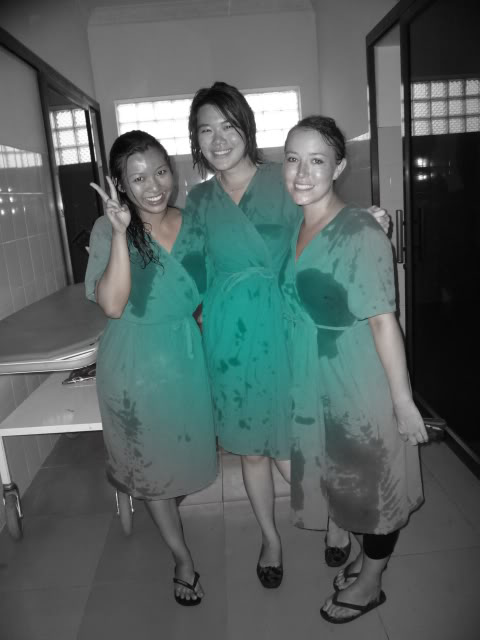
"I went to was a small hospital - Sam Roang Hospital, at the rural area of Siem Riep. This hospital is nothing like what you will ever see in...
1 min read
The road to teaching in Spain has narrowed this year — a major placement provider has pulled out, the free government program's window closes June...
1 min read
There's a specific kind of tired that only teachers know. It isn't that you've stopped caring about the work — it's that the work around the work has...
1 min read
Most articles about teaching English abroad are written by people guessing at who their readers are. We decided to stop guessing. We pulled the...