1 min read
Didn't Get A Spain Placement? Here's What's Still Open as July Begins
The road to teaching in Spain has narrowed this year — a major placement provider has pulled out, the free government program's window closes June...
5 min read
Randy LeGrant
:
October 28, 2026
Current as of October 2026. Holiday dates and local Halloween rules below come from 2026 government calendars and city announcements. They can shift, so confirm with your school or local coordinator before you make plans.
If you land abroad in the fall, the first holiday you meet won't be Thanksgiving. It will be Halloween. For many new teachers, that's the night homesickness sinks in. No porch light. No kids at the door. No bowl of candy you swore you bought for the neighbors' kids.
I've watched people leave home for more than 50 years, and the ones who do well in October stop looking for the Halloween they left behind. Every country wears this holiday like a costume. Some put it on with joy. Some keep it in the closet. One country has its own masks and wants you to see them.
This year Halloween falls on a Saturday, October 31. Back in July, we looked at the Fourth of July abroad. Here is the October companion: how Halloween looks in the six countries where CEP places teachers.Where Halloween Comes to School
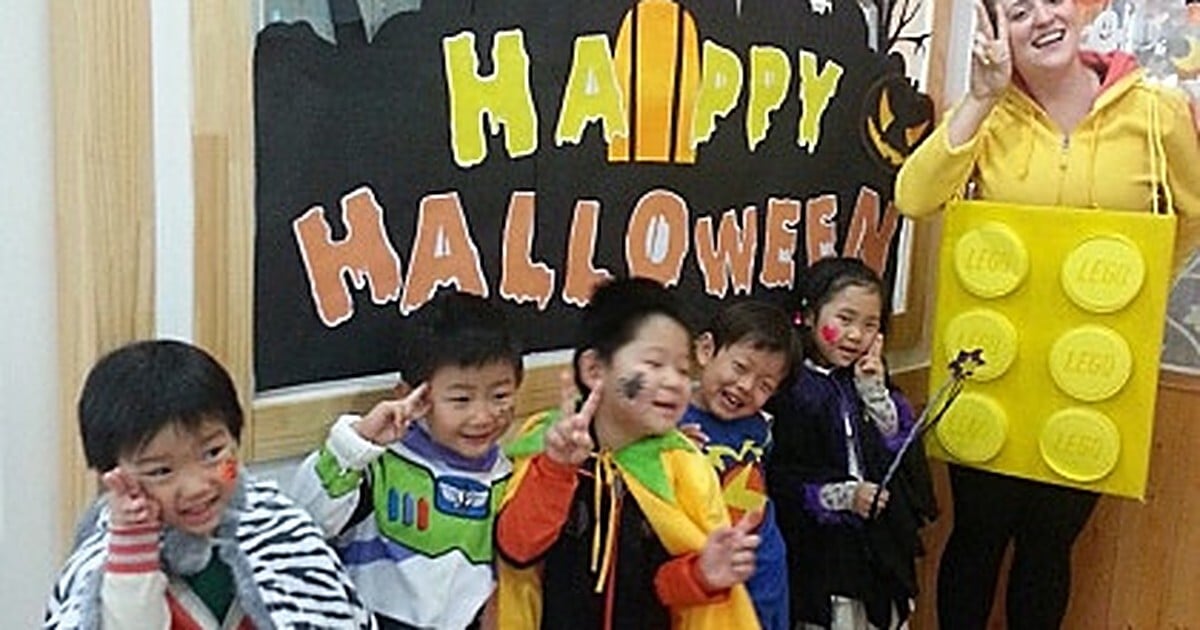
Thailand. Thais have a name for it: wan ploi phi, the day of releasing the ghosts. Thailand respects its ghosts all year. Ghost films are a staple, and you'll learn fast not to step over an offering left for a spirit or joke about one. So when October 31 comes, many Thai schools lean in. Costume contests. A haunted classroom. Trick-or-treat between buildings. Thailand's foreign-language curriculum asks students to learn about other countries' festivals, which gives the foreign teacher a reason to bring Halloween into class. You may be the one explaining jack-o'-lanterns to a room full of nine-year-olds. And three weeks later, on November 24, Thailand gives you its own night of light. On Loy Krathong, people float small banana-leaf baskets with candles on rivers and lakes across the country.
Vietnam. Young people brought Halloween to Vietnam, and they made it their own. In Hanoi, Hang Ma Street in the Old Quarter fills with masks, witch hats, pumpkin lanterns, and plastic skeletons weeks ahead, and crowds come as much for photos as for shopping. Young adults dress up for parties and mall events in the big cities. Older Vietnamese may shrug at it. The children's holiday in the Vietnamese fall is Mid-Autumn, the lantern festival, and it comes and goes in late September.
Costa Rica. Costa Rica has its own answer to Halloween, and it shows up on the same night. Since 1996, October 31 has been the Día de la Mascarada Tradicional Costarricense, the Day of the Traditional Costa Rican Masquerade. The day was created in part to give Costa Rican kids something of their own on a night foreign costumes had started to claim. Towns like Barva, Escazú, Aserrí and Cartago fill with giant handmade masks of characters like La Muerte, El Diablo and La Giganta, bobbing down the street to a brass-and-drum band called a cimarrona and chasing kids and grown-ups alike. In 2022, the country made the masquerades a national symbol, and the law asks public schools to teach them. Halloween still turns up in neighborhoods, malls, and some schools. But for one year, skip the plastic vampire teeth and go find the masks.
Cambodia. Cambodia's ghost season already happened. Pchum Ben, the festival of the ancestors, was a public holiday from October 10 to 12 this year. It lasts 15 days, during which families carry food to pagodas for relatives as far back as seven generations, and tradition says the spirits walk among the living. On top of that, a plastic pumpkin is small talk. If your school marks Halloween at all, it will likely come in with you. And you get a day off this week anyway. Thursday, October 29, is a public holiday for the anniversary of the King's coronation. The Water Festival, Bon Om Touk, follows November 23 to 25.
Japan. Halloween in Japan is a costume night for teens and adults, and for years, Tokyo's Shibuya scramble crossing was the capital. The city closed that street party on purpose. Shibuya now bans street drinking from 6 p.m. to 5 a.m., and the ward has long said Shibuya isn't a Halloween venue. Shinjuku also restricts street drinking on Halloween night. Tokyo has moved the fun indoors and into organized events, like the Ikebukuro Halloween Cosplay Festival. Halloween isn't a Japanese school tradition. If it comes into your classroom, you'll be the one carrying it.
South Korea. This one carries weight. On October 29, 2022, 159 people died in a crowd crush in a narrow alley in Seoul's Itaewon neighborhood during Halloween. Thursday is the fourth anniversary. In the years since, many stores, amusement parks, and businesses have set Halloween aside out of respect. The holiday hasn't vanished. Young people still dress up and go out. But the city now plans for it with care. This year, Seoul's Yongsan District will deploy about 2,550 people from the district office, police, and fire departments to Itaewon, and it expects about 165,000 visitors. If you teach in Korea, follow your school's lead. Some schools will hold a small costume day. Some won't. Either way, ask your co-teacher how this week feels. You'll learn more about Korea from that conversation than from any party.
Missing home on a holiday is normal. Almost everyone does. You won't get your porch. You'll get something else. Thai kids in ghost costumes. A Giganta twice your height in Barva. A Thursday off in Phnom Penh. A quiet question to a Korean colleague that turns into a friendship.
The teachers who come home with the best October stories are the ones who let the country pick the costume.
So if you could trade one October on your own front porch for one with the masks in Barva, would you?
See which of our six countries fits your next October
It depends on the country. In Thailand, many schools hold costume contests and haunted-classroom activities around October 31, and the foreign teacher often helps lead them. In Japan, Cambodia, and Vietnam, Halloween isn't a school tradition, so when it shows up in class, the foreign teacher usually brings it. In South Korea, schools set their own tone, especially in the week of the October 29 Itaewon anniversary.
Día de la Mascarada Tradicional Costarricense is Costa Rica's national masquerade day, held every October 31 since 1996. Towns such as Barva, Aserrí, Escazú, and Cartago parade giant handmade masks of characters like La Muerte and La Giganta to the music of cimarrona bands. Costa Rica declared the masquerades a national symbol in 2022, and public schools teach the tradition.
Yes, with more care than before. On October 29, 2022, 159 people died in a crowd crush in Seoul's Itaewon neighborhood during Halloween, and many businesses stepped back from Halloween events in the years after. Young people in Korean cities still dress up and go out, and in 2026, Seoul's Yongsan District planned about 2,550 safety personnel for Itaewon around Halloween. Teachers in Korea should follow their school's lead that week.
You can visit Shibuya, but there is no official Shibuya Halloween event, and the ward asks people not to treat the area as one. Shibuya bans street drinking every night from 6 p.m. to 5 a.m., and Shinjuku restricts street drinking on Halloween night. Organized events, such as the Ikebukuro Halloween Cosplay Festival, are the better choice in Tokyo.
In Thailand, Loy Krathong falls on November 24, 2026, when people float candlelit banana-leaf baskets on rivers and lakes. In Cambodia, Pchum Ben ran October 10 to 12 in 2026, the King's coronation holiday is October 29, and the Water Festival runs November 23 to 25. In Vietnam, the Mid-Autumn lantern festival for children comes in September, and young people in Hanoi and other big cities celebrate Halloween with costumes and parties. The Cultural Exchange Project places teachers in all three countries, plus Japan, South Korea, and Costa Rica.
The Cultural Exchange Project is a 501(c)(3) nonprofit that has placed native English speakers in paid teaching positions abroad for decades. It runs programs in Thailand, Japan, South Korea, Costa Rica, Cambodia, and Vietnam.
Randy LeGrant, CEP's Executive Director, writes these blog posts. If you like his writing, he also writes The Crossing — a weekly letter drawn from fifty years of watching people change their lives and their location. One story, one step, one question. Three minutes, every Friday. Subscribe for free here.
1 min read
The road to teaching in Spain has narrowed this year — a major placement provider has pulled out, the free government program's window closes June...
1 min read
Current as of October 2026. Dates, fees, and pay come from CEP's live Thailand program page and can change. Confirm current dates with our team...
1 min read
Current as of August 2026. Japanese immigration rules, processing times, and requirements change periodically — this post is reviewed annually....
1 min read
Processing times and application dates below reflect mid-2026 conditions and change frequently. Verify current timelines with the U.S. Department of...
1 min read
Current as of July 2026. Thai visa and work-permit rules change periodically — always confirm the latest requirements with your placement...
1 min read
Costa Rica's school year runs February to December, and we're right in the thick of it. If you've been waiting for the right moment to leave the U.S....