5 min read

Never Taught? What Japan's Schools Ask in a Teaching Interview

Never Taught? What Japan's Schools Ask in a Teaching Interview
8:33

Last updated October 2026. Dates, deadlines, and salaries taken directly from the CEP's Live Japan Program webpage and subject to changes. Always check directly with a CEP Placement Advisor before booking any arrangements.


The email comes into your inbox on Tuesday.  They want to conduct an interview with you for employment at a Japanese school.  The interview takes place on Thursday evening, their Friday morning.

Your initial reaction is icy-cold fear.  Not once in my entire life have I been in charge of teaching a single lesson.  How could I possibly convince them I’m the guy they need?  You’re twenty-two, you hold your degree for five months and the last interview you conducted yourself was on campus hiring.  So, let’s go back there.  These positions do not require previous teaching experience and the school understands this.

Who Is Interviewing Right Now?

Two groups.

The first group has already put applications in for teaching jobs in Japanese public schools, which needed to happen prior to September 30th.  They begin their contracts on March 25th, 2027, and interviews occur currently.  That deadline has come and gone.  If you’re reading this message now, then this isn’t your interview.

My second group consists of those interested in the private eikaiwa schools throughout Japan.  These schools recruit year round and hiring typically takes 3-4 months from application until first day of class.  Apply this week and finish up the hiring process before the new year starts.

I recommend applying and interviewing immediately for the following reasons. Hiring slows drastically from December through February and there will be far more openings available in October compared to January.

What the School Is Listening For

I have watched people get ready for this conversation for 50 years. The school has your resume already. The interview is for four things a resume cannot show.

Whether you will stay. The contract runs 12 months. A school that hires you will spend weeks on your visa paperwork before you ever meet a student. They want to hear that you have thought about month seven, when the newness has worn off and it is raining.

Whether you will go where the job is. Positions are spread across the country and many are in smaller towns. Do not expect Tokyo, Osaka, or Kyoto. Most schools hire for a network of branches and assign the location close to your training week. If there is only one city you would accept, tell us before the interview.

Whether you know the schedule you are signing up for. A public school assistant works Monday through Friday beside a Japanese teacher, with 25 to 30 students in the room. A language school teacher is alone with 5 to 15 students, often works weekends, and takes two weekdays off instead. Both are 40 hours a week with 25 to 35 of them teaching. Candidates who learn this during the interview look surprised, and schools notice.

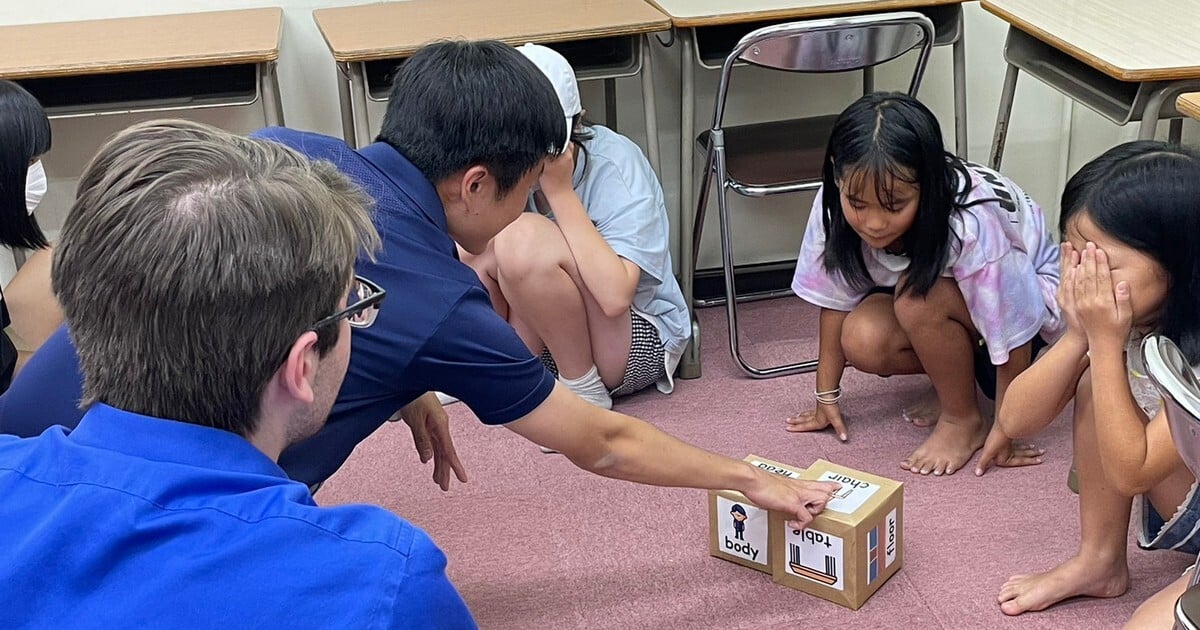
Whether a room of eight-year-olds can follow you. Slow down. Use short sentences. The interviewer is hearing your classroom voice whether you mean to use it or not.

The Prep Checklist

Test your technology before you start your interview.  Your room which might look fine during noon might resemble a cave by 8 pm.

Dress for success.  The schools here take professional appearances very seriously and treat the interview as the first glimpse into your classroom teaching.

Write a statement, at minimum 60 seconds long, on “Why Japan?”.  We have all had the sake, sushi, and bullet train stories.  Beyond that, what is it you want to discover?

Describe one lesson you taught successfully, regardless of the age group.  Coaches, tutors, mentors all qualify as teaching roles.  Describe a failure within that lesson and describe how you modified your approach moving forward.

Do your homework on your placement site prior to arrival and know precisely where you stand with the requirements.  Your TEFL certificate, for example, needs to total 120 hours.

And while we’re on the subject of driving.  Many positions include a company-provided vehicle, as the placement sites span a wide geographic area.

Be sure to prepare 2 questions for each interview, covering key issues including the grade-level(s) for your assignment and details regarding the orientation/training period. 

As a final point of emphasis.  This cannot be emphasized enough.  Don’t try to fool us!  You are a new teacher and they have hired literally hundreds, like yourself.  Be honest about your inexperience, and provide your strategy for overcoming your lack of knowledge!

After the Interview

An offer starts the clock on your paperwork. Your school applies to Japanese immigration for your Certificate of Eligibility. That step takes four to six weeks and can run to ten at busy times. When it arrives, you take it to your nearest Japanese consulate and your work visa is issued before you fly. We guide you through each piece, and the full document list is here.

The salary on the other side is ¥215,000 to ¥250,000 a month on either track. Every school we place you with has been checked first, so the interview runs both ways. You are allowed to ask what a normal week looks like and to listen hard to the answer.

And if someone at home is still calling this a year off, there is a better way to describe it.

Sometime in that interview the school will ask where in Japan you are willing to live. Do you know your answer?

Talk to us about teaching in Japan →

Frequently Asked Questions

What do schools in Japan ask in a teaching interview?

Schools want to know whether you will complete a 12-month contract, whether you are open to a placement anywhere in Japan, whether you understand the schedule for your school type, and whether you speak clearly enough for young learners. Expect questions about why you chose Japan and about any experience teaching or working with children. Prior classroom experience is not required for the Cultural Exchange Project's Japan program.

Can I still get a teaching job in Japan for January 2027?

Possibly, through a private language school. Private language schools in Japan, called eikaiwa, hire year-round, and the process takes about three to four months from application to first day, so an October application points to a late January or February start. Public school positions for the March 25, 2027 intake closed to new applications on September 30, 2026.

Do I need teaching experience to teach English in Japan?

No. The Cultural Exchange Project's Japan program requires a bachelor's degree and a 120-hour accredited TEFL, TESOL, or CELTA certificate, and it does not require prior teaching experience. Schools hire recent graduates regularly and train them before they begin.

How long does it take to get to Japan after a job offer?

After an offer, your school applies for your Certificate of Eligibility, which takes four to six weeks on average and up to ten weeks at peak periods. You then apply for your work visa at a Japanese embassy or consulate before departure. From first application to first day of teaching, plan on three to four months for a private language school.

Where does the Cultural Exchange Project place English teachers?

The Cultural Exchange Project places native English speakers in paid teaching jobs in Thailand, Japan, South Korea, Costa Rica, Cambodia, and Vietnam. In Japan, positions are available nationwide in public schools and private language schools, often in smaller towns, and the job is confirmed before you leave home. Monthly salary in Japan is ¥215,000 to ¥250,000.


The Cultural Exchange Project is a 501(c)(3) nonprofit that has placed native English speakers in paid teaching positions abroad for decades. Programs in Thailand, Japan, South Korea, Costa Rica, Cambodia, and Vietnam.

Randy LeGrant, CEP's Executive Director, writes these blog posts. If you like his writing, he also writes The Crossing — a weekly letter drawn from fifty years of watching people change their lives and their location. One story, one step, one question. Three minutes, every Friday. Subscribe free here.


Japan Work Visa for Teachers: The Current Document Checklist

1 min read

Japan Work Visa for Teachers: The Current Document Checklist

Current as of August 2026. Japanese immigration rules, processing times, and requirements change periodically — this post is reviewed annually....
Read More
Teaching in Japan Next Year: The Application Timeline Starts Now

1 min read

Teaching in Japan Next Year: The Application Timeline Starts Now

Here is the thing almost no one tells you about teaching in Japan: the hardest part isn't getting hired. It's the paperwork clock that startsafter...

Read More
Japan Wants ALTs This Spring — Here's What the Job Pays

1 min read

Japan Wants ALTs This Spring — Here's What the Job Pays

Current as of August 2026. Salary, loan, and deadline figures are pulled from CEP's live Japan program page — confirm details with our team before...

Read More
CIEE Retired Teach Abroad and TEFL — Here's What That Means for You

1 min read

CIEE Retired Teach Abroad and TEFL — Here's What That Means for You

CIEE, one of the oldest names in international exchange, is winding down its Teach Abroad and TEFL certification programs. If you were planning to...

Read More
What The Fourth of July Is Like When You're Teaching 8,000 Miles Away

1 min read

What The Fourth of July Is Like When You're Teaching 8,000 Miles Away

The Fourth of July is the one American holiday that doesn't travel well. Thanksgiving you can explain. Halloween has gone global. But the Fourth —...

Read More
Thailand Visa Check: Current Non-Immigrant B Requirements for Teachers

1 min read

Thailand Visa Check: Current Non-Immigrant B Requirements for Teachers

Current as of July 2026. Thai visa and work-permit rules change periodically — always confirm the latest requirements with your placement...

Read More