

5 min read

Japan Interview Season: What to Expect and How to Prepare

Japan Interview Season: What to Expect and How to Prepare
9:15

Current as of November 2026. Intake dates and hiring windows below come from CEP's Japan program page. Interview formats vary by employer. Confirm current dates with us, and read your own interview invitation, before you book a flight or give notice at a job.

Somewhere in the second half of a Japan teaching interview, the questions stop. The interviewer smiles, says something close to "Now I'll be your student," and waits.

That is the moment that keeps recent grads awake the night before. You have a degree, a TEFL certificate, maybe some tutoring, and you have never stood in front of a class. And a stranger on a video call is about to pretend to be seven years old.

You don't need classroom years for this. You need five minutes, planned ahead and rehearsed out loud. Our October post covered what schools listen for in the conversation part of the interview. This one covers what surrounds it: when the next wave of interviews comes, the stages you can expect, and how to build the demo lesson.When the Next Interviews Happen

Japan hires on two tracks, and they run on different clocks.

Public schools hire around March and September, 7 to 12 months ahead of the start date. The spring 2027 cycle closed with the September 30 deadline. The next public-school intake is September 1, 2027, with applications around February and March 2027. That late-winter window is when the next large group of public-school interviews happens.

Private language schools (eikaiwa) hire on a rolling basis, about 3 to 4 months from first contact to first day. December through February is a quieter hiring stretch, though not a closed one.

So November is not the busiest month to interview. It is the best month to prepare, because the people who walk into February with a rehearsed demo lesson and their documents in order are the ones who get the first offers. If you want the full calendar, Teaching in Japan Next Year: The Application Timeline lays it out.

The Stages You Can Expect

CEP teachers interview with the school or language company that will employ them, and each employer runs its own process. Applicant reviews posted on Glassdoor in 2025 and 2026 describe a sequence that repeats across employers:

  • A short screening call to confirm the basics and your start date.
  • A longer video interview about why Japan, how you would teach, and what challenges you expect living there.
  • A demo lesson, either live on the call or recorded and submitted between interviews.
  • Sometimes a short extra: a few questions in Japanese to gauge your level, a grammar quiz, or a video of you reading a provided script so they can hear how you speak.

Not every employer uses every stage. The invitation email usually tells you which ones you're getting, and some list what the demo should cover. Read every line of it. Applicants who miss a requested document or show up without a prepared demo are easy to pass over, and both mistakes are avoidable.

The Demo Lesson, Built in Five Minutes

The demo is not a test of how much you know about grammar. It is a test of whether a child, or a tired adult after work, would enjoy learning from you. Here is how to build one.

Know who your student is. In a public-school interview, the interviewer usually plays an elementary or junior high student. In an eikaiwa interview, the student is often an adult who wants speaking time. Ask, if the invitation doesn't say.

Pick one teaching point and only one. Colors. "What's this?" Prepositions of place, like in, on, and under, which work with any cup and coin on your desk. For adults, ordering at a café or giving advice with should. A small target lets you finish, and finishing is what interviewers remember.

Give it a shape. Five minutes splits like this:

  • Warm-up (30 seconds). A greeting, a smile, one easy question the student can answer.
  • Show the target (1 minute). Model it with a prop or a gesture. Say it slowly. Say it again.
  • Practice (2 to 3 minutes). A quick game, a pointing drill, a back-and-forth. The student talks more than you do.
  • Check (1 minute). Ask the student to use the phrase without your help. Then praise the effort, by name.

Use props that read on camera. A stuffed animal, colored paper, a small whiteboard you can hold up. Test each one on video the day before. A red card that looks orange on a webcam will derail a color lesson in about ten seconds.

Stay simple. Eikaiwa schools teach to their own method, and interviewers are watching for someone who can deliver it with warmth, not someone who will reinvent it. A clear, kind, ordinary lesson beats a clever one.

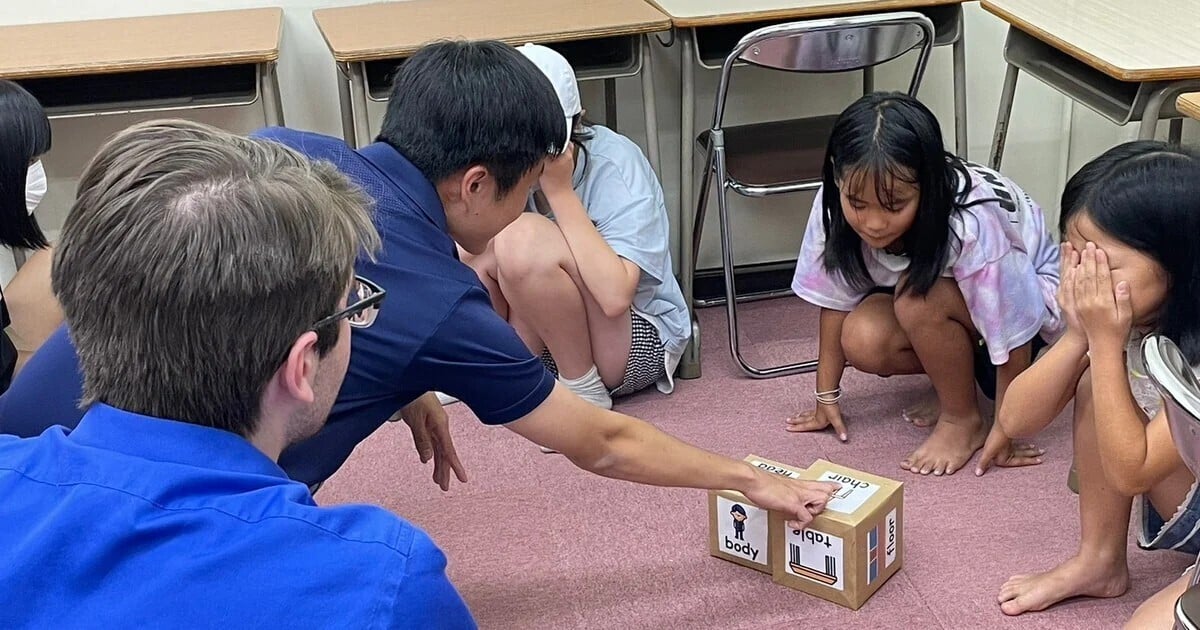
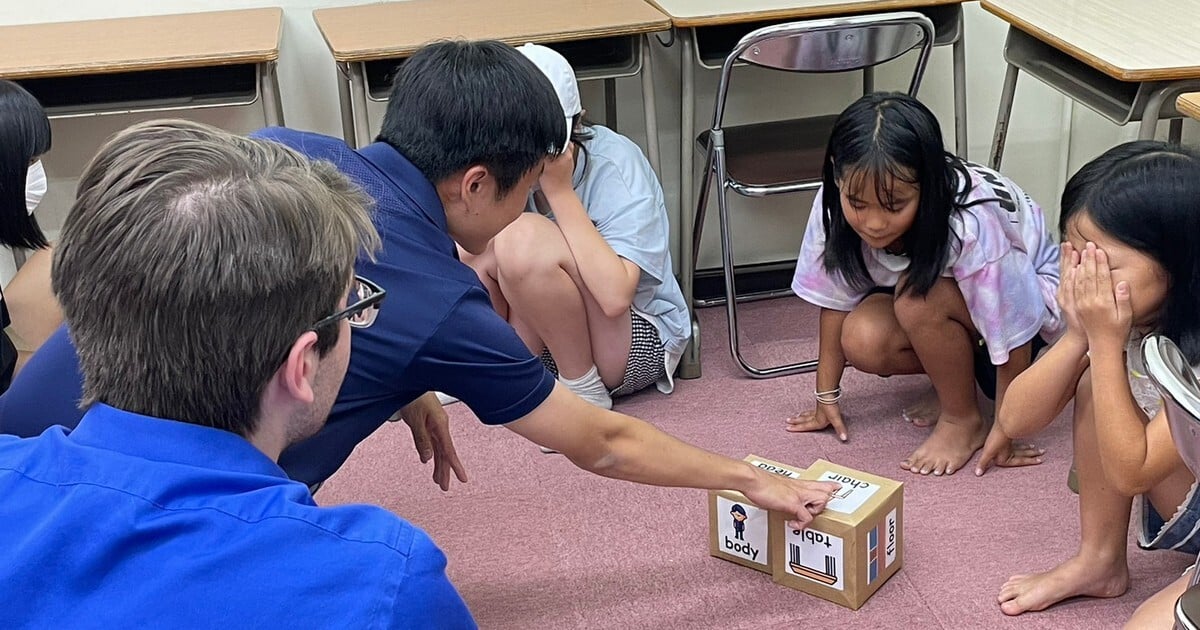
Have a backup for the surprise. Some employers spring the demo with little warning. One applicant review describes getting five minutes to prepare a lesson on body parts and a song, with the interviewer acting as a second grader. If that happens, "Head, Shoulders, Knees and Toes" works anywhere, at any speed, with no props at all.

What to Have Ready Before Any Call

A one-minute self-introduction, the kind you'd give a class on the first day. Where you're from, one photo or object, one thing you want to learn in Japan. Public-school teachers give some version of this in their first week, so interviewers are hearing a preview.

Your demo, rehearsed out loud three times and timed. Silent run-throughs don't count. Your voice is half of what they're evaluating.

Your documents. After an offer, you submit documents to the school, and the school applies for your Certificate of Eligibility, which takes 4 to 6 weeks and up to 10 at peak times. Having your degree and passport copies ready shortens the wait. Our Japan work visa document checklist lists what you'll need.

Your TEFL training, put to use. Japan requires a 120-hour accredited TEFL, TESOL, or CELTA certificate, and the demo lesson is where that training shows. CEP bundles TEFL Plus into the Japan program, and you can try the first three modules free before you commit. The lesson-planning modules are good demo practice.

If the interviewer said "Now I'll be your student" tomorrow morning, what would you teach?

Talk to us about teaching in Japan

Frequently Asked Questions

What happens in a teaching interview for Japan?

Most teaching interviews for Japan run in stages: a short screening call, a longer video interview about your reasons for going and how you would teach, and a demo lesson, either live or recorded. Some employers add a short Japanese check, a grammar quiz, or a recorded reading. Each employer sets its own process, so the interview invitation is the best guide to which stages you'll face.

What should I teach in a demo lesson for an English teaching job in Japan?

Teach one simple point, such as colors, "What's this?", or prepositions of place for children, or ordering at a café for adults. Build it in four parts: a warm-up, a model of the target, a short practice game, and a check where the student uses it alone. Keep the student talking more than you, and use props that show clearly on camera.

When do schools in Japan interview English teachers?

Japanese public schools hire around March and September, 7 to 12 months ahead. The next public-school intake through the Cultural Exchange Project starts September 1, 2027, with applications around February and March 2027. Private language schools (eikaiwa) hire year-round, with about 3 to 4 months from first contact to first day and a quieter stretch from December to February.

Do I need to speak Japanese to pass a teaching interview in Japan?

Japanese is not one of the requirements for CEP's Japan program, which asks for a bachelor's degree and a 120-hour TEFL, TESOL, or CELTA certificate. Some employers ask a few questions in Japanese during the interview to gauge your level, so a short self-introduction in Japanese helps. CEP teachers also take an online Japanese course before departure.

Can I interview for a teaching job in Japan from the United States?

Yes. Applicant reports describe phone and video interviews, with demo lessons delivered live on a call or recorded and submitted online, so you can complete the process from home. The Cultural Exchange Project places native English speakers in paid teaching positions in Japan, Thailand, South Korea, Costa Rica, Cambodia, and Vietnam, and guides teachers through the Japan visa process after a job offer.


The Cultural Exchange Project is a 501(c)(3) nonprofit that has placed native English speakers in paid teaching positions abroad for decades. Programs in Thailand, Japan, South Korea, Costa Rica, Cambodia, Spain, and Vietnam.

Randy LeGrant, CEP's Executive Director, writes these blog posts. If you like his writing, he also writes The Crossing — a weekly letter drawn from fifty years of watching people change their lives and their location. One story, one step, one question. Three minutes, every Friday. Subscribe free here.

Teaching in Japan Next Year: The Application Timeline Starts Now

1 min read

Teaching in Japan Next Year: The Application Timeline Starts Now

Here is the thing almost no one tells you about teaching in Japan: the hardest part isn't getting hired. It's the paperwork clock that startsafter...
Read More
Japan Work Visa for Teachers: The Current Document Checklist

1 min read

Japan Work Visa for Teachers: The Current Document Checklist

Current as of August 2026. Japanese immigration rules, processing times, and requirements change periodically — this post is reviewed annually....

Read More
Never Taught? What Japan's Schools Ask in a Teaching Interview

5 min read

Never Taught? What Japan's Schools Ask in a Teaching Interview

Last updated October 2026. Dates, deadlines, and salaries taken directly from the CEP's Live Japan Program webpage and subject to changes. Always...

Read More
Didn't Get A Spain Placement? Here's What's Still Open as July Begins

1 min read

Didn't Get A Spain Placement? Here's What's Still Open as July Begins

The road to teaching in Spain has narrowed this year — a major placement provider has pulled out, the free government program's window closes June...

Read More
Why Work Abroad, Not How To Work Abroad That Matters

1 min read

Why Work Abroad, Not How To Work Abroad That Matters

Recently, I declared 2015 at GeoVisions as the year of “Why.” Why?

Read More
The Journey Forward

1 min read

The Journey Forward

We do what we love with people that we love for people who love what we do. Over the years, doing business as The GeoVisions Foundation, we have been...

Read More